

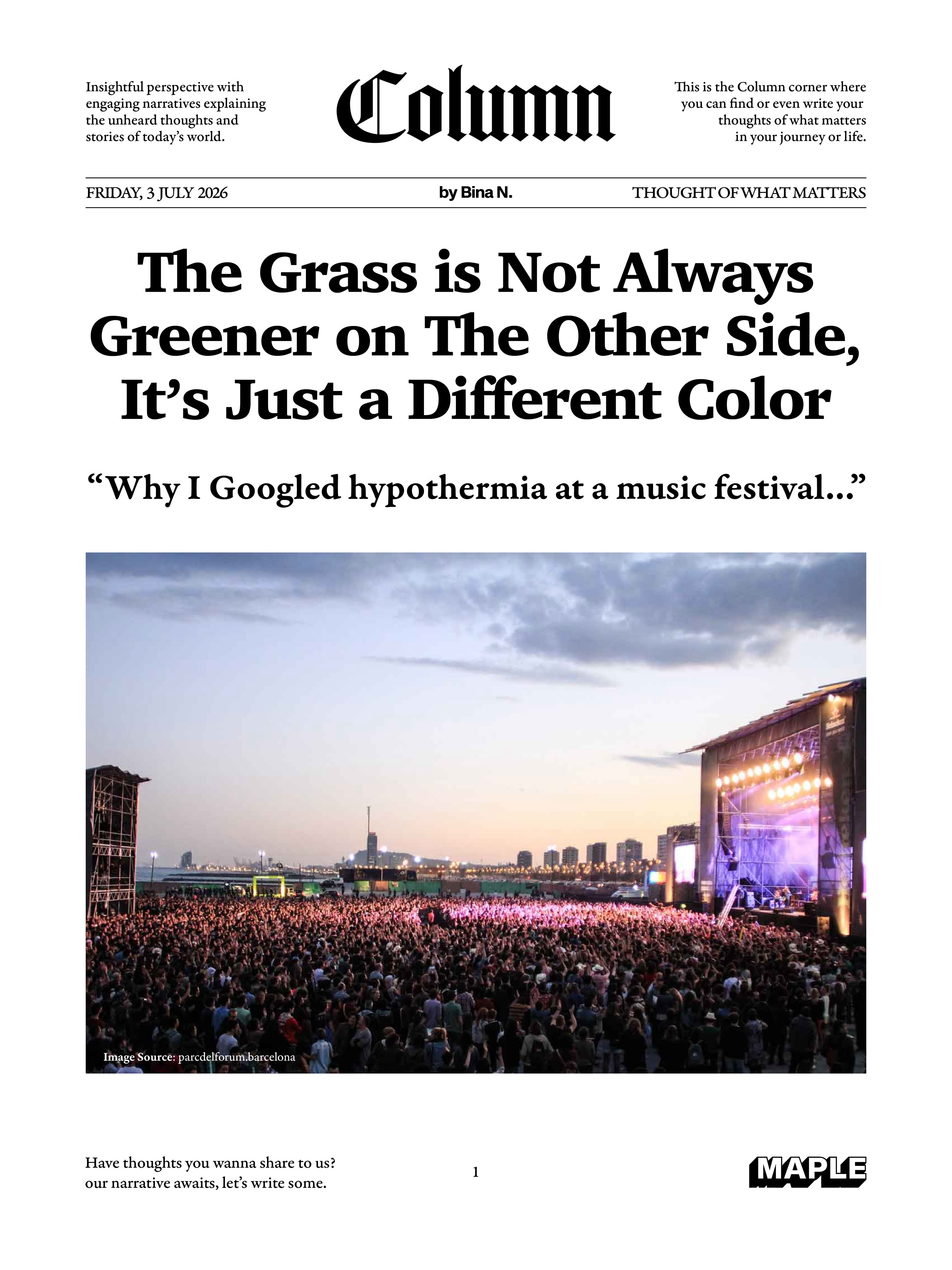
Primavera Sound, commonly just called Primavera, is an annual music festival held at the Parc del Fòrum in Barcelona, Spain. The first edition took place in 2001, initially as a showcase for Spanish noise bands. Today it has evolved into one of the largest and most-attended music festivals in Europe, and The New York Times has called it the “Coachella of Europe”. During their 24th edition this June, I came to understand how they got to where they are, and why I think they still have a lot to learn.
Primavera is more than a cultural phenomenon. This year was attended by 287,000 people, with international visitors accounting for 62% of attendance and local Spanish attendees making up the remaining 38%, placing Barcelona firmly on the bucket list of music enthusiasts around the world.
And these numbers don’t happen by accident.
Primavera owes its success to a stubborn commitment to its own values. Organizers prioritize quality and ambition over purely commercial appeal, curating lineups through a personal wishlist rather than chasing whoever is currently topping the charts. Their goal of transforming the music industry toward a more inclusive and diverse model isn’t just stated, but rather shows up consistently in how the festival is actually run.
Take Primavera Pro, for instance. It started back in 2010 as a cool side event for networking, but it has quickly turned into the ultimate go-to platform for scouting fresh, emerging talent in the music industry. At the same time, the festival actually walks the talk when it comes to diversity. They completely raised the bar for everyone else by becoming the first major festival to pull off a fully gender-balanced lineup. They also run this amazing “Nobody Is Normal” initiative, which is a solid safety protocol against harassment and discrimination.
Primavera doesn’t shy away from getting political either, setting the tone right away with massive “NO WAR” neon signs and even giving the main stage to a Palestinian activist to speak on freedom and peace. On top of that, they’re fiercely proud of their Catalan roots, boldly championing local acts as a symbol of resistance through their lineups.
With values like that, it’s easy to see why both audiences and recurring headliners love coming back to this festival.
Everything Primavera has built is not a small feat. It takes years of experience and iteration to arrive where they are today.
As someone who frequents music festivals in Indonesia and had never attended one overseas, I came in wondering how it would differ from my existing experiences. As it turns out, the grass is not always greener on the other side.
I arrived on the first day of the festival early in the afternoon. By that time, the sky was already dark with thick clouds and winds strong enough to blow your hair in multiple directions.
While I was able to enjoy Blood Orange’s energetic performance in dry conditions, the rain started to fall at the beginning of Geese’s set a few minutes later. It didn’t take long for it to turn from manageable drops that a regular disposable raincoat could handle into the kind of rainstorm that would have caused flooded roads and gridlocked intersections in Kemang, bringing Geese’s music to life in a way that felt almost intentional, their rugged rock sound forcing its way through the storm and the mosh pit alike.
Oklou’s mesmerizing performance and Father John Misty’s eclectic set proved their professional skills and undeniable charisma, drawing a crowd even as the rainstorm continued throughout the night. Eventually, the weather forced cancellations from headliners Massive Attack, Bad Gyal, and Mac DeMarco. Most festival attendees would agree that the safety and well-being of everyone at the site comes first. What was significantly harder to accept was being left to huddle, walk around, or stand clueless under the rain for hours, with no sufficient announcement or reassurance from the organizers.
The site’s lack of covered areas also left most attendees exposed to cold and wet conditions with no clear alternative. At one point, I was googling symptoms of hypothermia to check whether it was still safe for me to carry through the night, while wondering if this was simply how Europeans handle weather adversity. It was not until later that I found out Barcelona averages far fewer rainy days per year than Jakarta, with a third of its precipitation level. The organizers’ lack of experience in handling this kind of torrential rain likely contributed to their fumble.
Fortunately, things took a brighter turn on the second and third days. I was equally impressed and entertained watching PinkPantheress perform with her live band, complete with a drummer who brought her iconic drum and bass beats to life with real kicks and hits, and a group of dancers who gave the crowd something to move to. The Cure’s two-and-a-half-hour set reminded me that they are living legends who have touched the lives of people spanning three generations.
I kept myself moving on day three, catching Big Thief, Little Simz, My Bloody Valentine, The xx, and Gorillaz back-to-back. Each setlist completely united the crowd, creating this shared, core-memory emotion that’s impossible to find outside a concert; and honestly, impossible to explain if you weren’t there.
While the weather between the first day and the rest of the festival contrasted sharply, one thing remained consistent throughout: the lax crowd control and the carefree nature of the attendees.
I’m used to festivals back home in Indonesia always enlisting security and volunteers to keep the crowd moving in a clear, fluid direction. Primavera’s organizers, by contrast, seem to trust that people should just be free to move however they individually prefer.
Another stark difference is in how the crowds actually enjoy the shows. While audiences in Indonesia tend to engage by singing along or taking photos, talking with friends while the artist is performing is a completely regular sight at Primavera. At times it was difficult to hear the music clearly, despite the gigantic speakers installed across the site.
Experiencing this gap in festival cultures made me realize that maybe, it is not the case that the grass is greener on the other side. Maybe the grass is just a different color altogether. Primavera assumes that a crowd can mostly take care of itself. To them, inclusion and personal freedom mean letting everyone express themselves freely, even if that means talking loudly right through a set.
Meanwhile, Indonesian festival culture tends to prize order and conformity. Perhaps it is something ingrained in us, our Asian-ness, our collective memory of deadly demonstrations, our deep reluctance to cause inconvenience to others even at the cost of our own comfort.
I don’t think it is a matter of which values are better than the other. It’s a matter of which values resonate with you the most, and when.
There is a balance somewhere to be found, and I’m looking forward to defining my own terms at my next festival.